

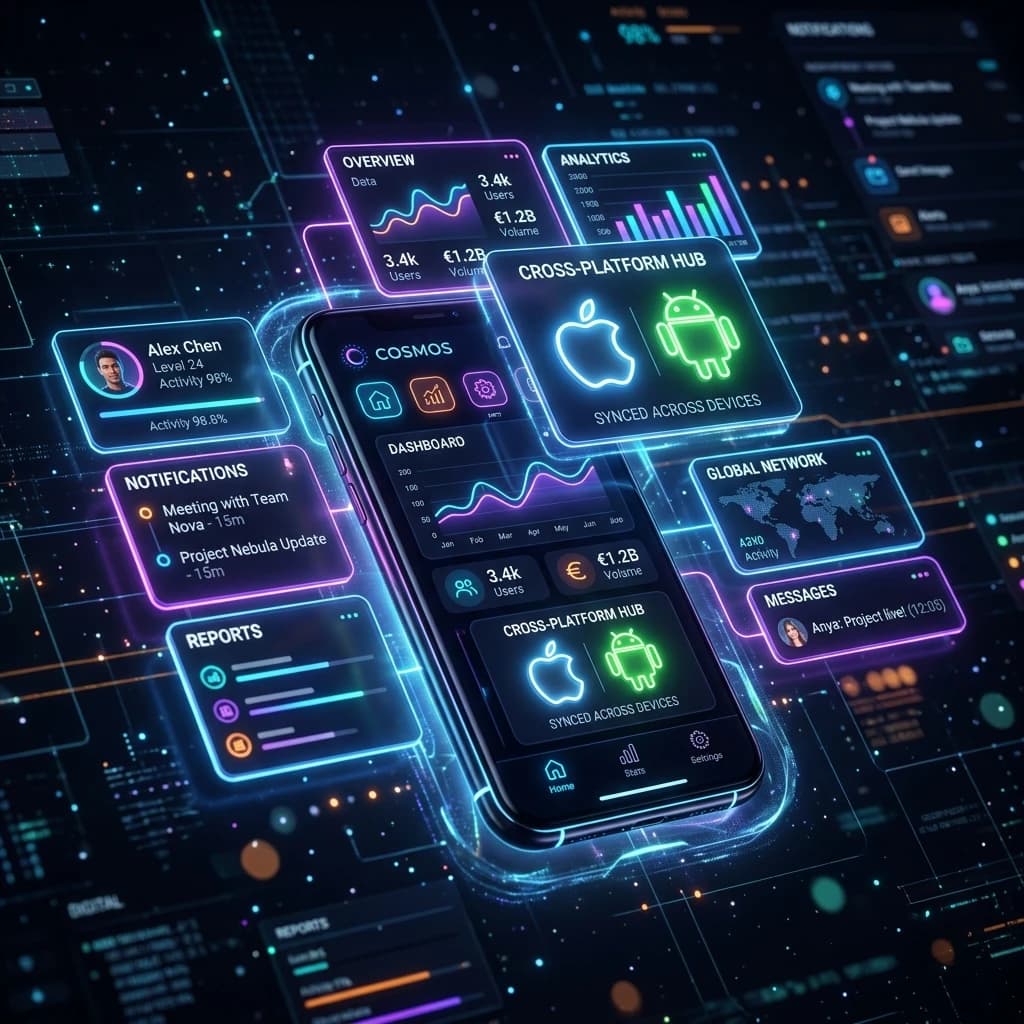
Mobile App Development Services for iOS, Android and Cross-Platform Products
Build a new mobile product, extend an existing business system, or modernize an outdated application through strategy, UX design, native and cross-platform engineering, backend development, integrations, quality assurance, app-store release, and post-launch support.
Mobiloitte USA delivers mobile app development services for customer-facing applications, enterprise mobility platforms, workforce tools, field-service apps, commerce products, subscription apps, internal operational systems, and AI-enabled mobile experiences.
Our teams help organizations choose the right approach for iOS, Android, Flutter, React Native, hybrid, or progressive web applications based on user needs, device capabilities, business workflows, integration requirements, security expectations, release priorities, and long-term ownership.
Begin with your users, essential workflows, device requirements, existing systems, security needs, and the smallest valuable release.
Platform Strategy
Choose native iOS, native Android, Flutter, React Native, hybrid, or PWA according to the product instead of forcing every requirement into a predetermined technology.
Mobile-First UX
Design around touch interactions, smaller screens, device capabilities, changing connectivity, accessibility, and the real conditions in which users operate mobile products.
Connected Architecture
Integrate mobile apps with APIs, cloud services, databases, CRM, ERP, payments, identity, analytics, notifications, and internal platforms through controlled interfaces.
Long-Term Reliability
Plan for automated testing, monitoring, app-store updates, OS changes, security maintenance, crash management, analytics, and continuous product improvement after launch.
Build a Mobile Application Around the User and the Business Workflow
A mobile application is not simply a smaller version of a website. It operates across different screen sizes, operating-system versions, variable network conditions, offline environments, camera and GPS capabilities, app-store policies, device permissions, and changing user contexts.
A well-designed mobile product connects the user experience to the systems and workflows behind it. That means platform selection, backend architecture, integrations, security, offline behavior, testing, analytics, and release operations should be considered together rather than handled as isolated technical tasks.
Mobiloitte connects mobile frontend and backend components through one delivery model:
The objective is not simply to publish an app. It is to create a mobile product that users can understand, trust, complete meaningful tasks with, and continue using as the product evolves.
What Are Mobile App Development Services?
Mobile app development services cover the strategy, design, engineering, integration, testing, deployment, and ongoing improvement required to build and operate applications for smartphones, tablets, and other mobile devices.
A complete engagement may include product discovery, UX/UI design, iOS app development services, Android app development, native app development, Flutter mobile app development, React Native app development, backend and API engineering, cloud integration, mobile security, analytics, store submission, maintenance, and modernization.
For organizations evaluating a mobile app development company in the USA, the most important question is not only which framework a team uses. It is whether the provider can connect product decisions, engineering quality, integrations, security, release operations, and long-term maintenance around the business outcome.
Native vs. Cross-Platform vs. Hybrid vs. PWA
The right mobile architecture depends on the experience you are building, the device capabilities you need, your release model, team structure, performance requirements, integration landscape, and expected product lifespan.
Native iOS & Android
Swift and SwiftUI for iOS, and Kotlin and Jetpack Compose for Android, are suited to products that need platform-specific experiences, strong performance, deep device integration, or separate platform roadmaps.
Native app development can be especially valuable when the application depends heavily on camera processing, Bluetooth, background services, biometric authentication, location capabilities, complex animations, platform-specific SDKs, or tightly controlled performance.
Cross-Platform App Development
Flutter and React Native allow teams to share significant portions of application logic across iOS and Android while still integrating with native device features where required.
Cross platform app development can support faster multi-platform delivery, feature consistency, shared design systems, and efficient maintenance when the use case does not require completely independent native applications.
Flutter Mobile App Development
Flutter mobile app development is well suited to products that need a consistent cross-platform interface, shared application logic, rapid UI iteration, and coordinated releases across iOS and Android.
We design Flutter applications around product requirements first, including navigation, state management, backend integration, offline behavior, testing, analytics, accessibility, native plugins, and store release.
React Native App Development
React Native app development can be a strong fit for teams that want cross-platform mobile delivery while working within a JavaScript or TypeScript ecosystem and integrating native modules where needed.
For buyers specifically evaluating a React Native mobile app development company, the technical decision should include native-module requirements, performance expectations, upgrade strategy, dependency health, automated testing, and long-term maintainability.
Hybrid Mobile Apps
Hybrid applications use web technologies inside a native container. They can fit simpler internal tools, content-heavy applications, or scenarios where teams want to reuse existing web engineering capabilities.
Progressive Web Apps (PWA)
Progressive web apps provide app-like browser experiences without requiring a traditional app-store installation. They can support responsive experiences, offline caching, installability, and selected push-notification capabilities depending on platform support.
When You Need Custom Mobile App Development
Custom mobile app development makes sense when your users, workflows, device requirements, integrations, or security needs cannot be served effectively by generic software.
Field Paper Forms
Inspections, signatures, work orders, site updates, and evidence are collected manually on paper, creating delays, duplicate entry, and incomplete operational visibility.
Lack of Deskless Access
Field and mobile teams lack secure access to schedules, customers, inventory, documents, approvals, or tasks while away from desktops and office systems.
System Silos & Duplicate Entry
Employees repeatedly enter the same customer, order, inspection, job, or service information into multiple systems because mobile workflows are not connected to core applications.
Off-the-Shelf Mismatch
Packaged mobile applications force teams into rigid workflows that do not reflect how the business operates, creating unnecessary steps and workarounds.
Outdated Current App
An existing mobile application may depend on old frameworks, outdated libraries, inconsistent UI patterns, slow release processes, weak observability, or unstable integrations.
Unreliable Offline Behavior
Mobile teams lose progress or cannot complete critical tasks when connectivity becomes weak or unavailable in field, warehouse, travel, or remote environments.
Inconsistent Platform UX
The iOS and Android versions of the same product behave differently, release features at different times, or provide inconsistent navigation and interaction patterns.
Strict Mobile Security Needs
Applications handling business, financial, health, location, identity, or customer data may require stronger authentication, authorization, encryption, secure storage, logging, and data-minimization controls.
Manual Release Bottlenecks
Each release requires repetitive manual builds, signing, test distribution, environment coordination, or store submission steps that slow product teams.
AI Feature Integration
The mobile product needs intelligent search, document OCR, recommendations, image analysis, voice interaction, AI assistants, or other AI app development capabilities connected to business data and workflows.
Our Mobile App Development Services
Our mobile app development services span discovery, product design, native and cross-platform engineering, enterprise integration, security, release operations, and ongoing product improvement.
Mobile App Strategy & Discovery
Define product goals, target users, primary journeys, device requirements, business systems, platform options, offline needs, security constraints, analytics, MVP boundaries, and release priorities before full-scale implementation.
MVP App Development
Build a focused first release that validates the highest-value user journeys without carrying unnecessary scope into the initial launch. MVP app development can include prototypes, core backend services, analytics, beta testing, and phased store release.
Mobile UX & UI Design
Design touch interactions, navigation, wireframes, interactive prototypes, responsive layouts, accessibility states, and reusable components informed by Apple and Android interface conventions.
iOS App Development Services
Develop native iPhone and iPad applications using Swift, SwiftUI, and relevant Apple frameworks. Capabilities can include Face ID, Apple Pay, notifications, camera workflows, background processing, offline storage, and App Store submission.
Android App Development
Build Android applications using Kotlin and Jetpack Compose for phones and tablets, including biometrics, Google services, location features, notifications, offline data, background operations, and Google Play release workflows.
Native App Development
Engineer platform-specific mobile applications where performance, device integration, operating-system features, or product requirements justify separate iOS and Android implementations.
Flutter Mobile App Development
Build cross-platform applications with Flutter using shared UI and business logic, structured state management, native integrations, automated testing, analytics, and coordinated iOS and Android releases.
React Native Mobile App Development
Develop cross-platform applications using React Native and TypeScript, with reusable components, native module integrations, API connectivity, testing, performance monitoring, and controlled upgrade planning.
Enterprise Mobile App Development
Create enterprise mobility applications for employees, partners, operations, sales, field teams, service teams, inventory workflows, approvals, internal communications, and secure access to business systems. Enterprise mobile app development may require identity integration, role-based permissions, MDM considerations, offline synchronization, audit trails, private APIs, and deployment approaches aligned with internal governance.
Workforce & Field-Service Mobile Apps
Support work orders, dispatch, GPS routing, maps, barcode or QR scanning, photo evidence, e-signatures, offline forms, asset records, customer updates, and background synchronization for deskless teams.
Offline-First Mobile Architecture
Design local storage, cached reference data, queued actions, background synchronization, conflict resolution, retry rules, and clear user feedback for applications operating through unreliable connectivity.
Mobile Backend & API Integration
Develop and connect REST or GraphQL APIs, microservices, push-notification services, cloud databases, identity platforms, payment systems, CRM, ERP, support tools, and custom enterprise systems.
AI-Powered Mobile Apps & On-Device ML
Add AI capabilities where they improve the user journey, including assistants, document capture and OCR, voice interaction, image analysis, search, recommendations, classification, summarization, and selected on-device machine-learning experiences.
Mobile Commerce, Payments & Subscriptions
Integrate payment gateways, digital wallets, subscription models, entitlement logic, purchase flows, receipts, order status, and backend reconciliation according to the product and platform requirements.
Mobile App Modernization
Modernize existing applications through framework upgrades, architecture refactoring, UI refreshes, API replacement, cloud migration, dependency cleanup, performance improvements, observability, and release-pipeline automation.
Mobile Quality Engineering & Security Testing
Test functional workflows, APIs, devices, operating-system versions, accessibility, performance, offline behavior, upgrade paths, permissions, authentication, and security-sensitive flows before and after release.
App Store Deployment & Maintenance
Support signing, TestFlight or internal testing, Google Play tracks, store metadata coordination, release builds, crash monitoring, OS compatibility, dependency updates, analytics review, and continuous product improvement.
Mobile App Development for Startups, Enterprises, and Existing Product Teams
Different mobile initiatives require different delivery models. A new venture may need rapid MVP app development and validated product scope. An enterprise may need deep system integration, identity controls, offline workflows, and staged rollout. An established product team may need modernization, extra engineering capacity, or platform-specific expertise.
As a custom mobile app development company, Mobiloitte can engage from discovery through production or support an existing internal team at a defined stage of the lifecycle.
For U.S. organizations comparing a mobile app development company USA, a mobile application development company, or a specialist mobile engineering partner, we recommend evaluating architecture ownership, integration depth, QA discipline, security practices, release operations, and post-launch support alongside design and coding capability.
Mobile App Architecture for Connected Products
A production mobile product typically spans several layers that should be designed together.
Experience Layer
Native or cross-platform interfaces, navigation, accessibility, local state, device permissions, offline behavior, notifications, deep links, and user feedback.
Application Layer
Business rules, workflow logic, session management, feature configuration, personalization, and mobile-specific application behavior.
API & Integration Layer
REST or GraphQL APIs, authentication, CRM, ERP, payments, scheduling, support systems, data platforms, messaging, and custom enterprise services.
Data Layer
Local device storage, cloud databases, caching, synchronization, analytics events, secure secrets, and conflict-resolution strategies.
Platform & DevOps Layer
Cloud infrastructure, CI/CD, build signing, environment management, automated testing, feature flags, observability, and controlled release processes.
Security & Governance Layer
Authentication, authorization, encryption, secure storage, least-privilege access, logging, privacy controls, dependency management, and release governance.
Our Mobile App Development Process
We use a phased process so product, design, engineering, integration, testing, and release decisions remain connected.
Define Product Outcome
Clarify user problem, business objective, target audience, success measures, and workflow.
Discover Users & Workflows
Map user journeys, operational processes, integrations, offline needs, and security constraints.
Select Platform Strategy
Choose native iOS, Android, Flutter, React Native, hybrid, or PWA based on product requirements.
Define MVP & Roadmap
Prioritize smallest valuable release, future capabilities, integration sequence, and technical risks.
Design UX & Architecture
Create user flows, prototypes, design components, API contracts, data models, and backend topology.
Build in Delivery Cycles
Implement frontend, backend, integrations, tests, analytics, and device capabilities incrementally.
Validate Real Conditions
Test devices, OS versions, network changes, offline states, permissions, and performance.
Prepare Store Release
Coordinate signing, store assets, privacy disclosures, monitoring, release notes, and staged rollout.
Measure Product Health
Monitor crashes, performance, adoption, journey completion, feature usage, and release quality.
Improve and Scale
Use product evidence to refine UX, strengthen architecture, reduce technical debt, and expand.
Mobile Apps We Can Engineer
Purpose-built mobile applications engineered for enterprise adoption, stability, and customer engagement.
Customer & Consumer Apps
Account access, service requests, subscriptions, loyalty, commerce, bookings, support, communication, and personalized mobile experiences.
Enterprise Mobility Apps
Internal applications for approvals, operations, sales, inventory, compliance workflows, workforce access, and secure business-system interaction.
Field-Service Apps
Scheduling, routing, asset records, work orders, photos, signatures, checklists, offline forms, and technician-to-office synchronization.
Commerce & Subscription Apps
Product catalogs, ordering, payments, memberships, subscriptions, entitlements, loyalty, notifications, and account management.
Healthcare Administration Apps
Non-clinical scheduling, patient-service workflows, staff tools, document capture, operational coordination, and approved communication experiences.
Financial & FinTech Apps
Customer onboarding, account servicing, payments, document flows, support, notifications, and secure mobile access aligned with product requirements.
Logistics & Delivery Apps
Driver workflows, dispatch, proof of delivery, route information, status updates, scanning, exception handling, and offline synchronization.
Real Estate & PropTech Apps
Property discovery, lead capture, agent tools, viewing schedules, tenant requests, field inspections, document workflows, and service updates.
AI-Enabled Mobile Products
Mobile assistants, intelligent search, voice experiences, OCR, recommendations, image analysis, classification, and workflow automation connected to approved data sources.
Technology Ecosystem
We select technology based on product requirements, existing systems, delivery constraints, team ownership, and long-term maintainability.
Native iOS & Android
Swift, SwiftUI, UIKit, Kotlin, Jetpack Compose, Java
Cross-Platform
Flutter, React Native, Ionic, Capacitor, PWA, Service Workers
Backend & Cloud
Node.js, Python, Java, AWS, Azure, GCP, Firebase, PostgreSQL
DevOps & Release
Fastlane, TestFlight, Google Play Console, GitHub Actions, Sentry
Mobile Security, Quality, and Reliability
Identity & Access
Support appropriate authentication, token handling, biometric capabilities, session controls, role-based authorization, and integration with enterprise identity systems where required.
Secure Data Handling
Protect sensitive data through encrypted transport, secure local storage, controlled caching, secret management, minimized data collection, and defined retention behavior.
Mobile Security Testing
Review authentication, authorization, API access, data leakage, insecure storage, dependency risk, transport security, permissions, and other application-specific attack surfaces.
Automated Quality Assurance
Combine unit, integration, API, UI, device, regression, accessibility, performance, and release testing based on product risk and platform complexity.
Crash & Performance Monitoring
Track crashes, freezes, failed API calls, slow screens, network failures, release regressions, and other signals that affect product reliability.
Why Choose Mobiloitte USA for Mobile App Development?
We connect mobile UX, application engineering, backend development, integrations, testing, and post-launch operations around the product journey.
Product and Engineering Together
We connect mobile UX, application engineering, backend development, integrations, testing, and post-launch operations around the product journey.
Native and Cross-Platform Options
We support iOS, Android, Flutter, React Native, hybrid, and PWA approaches so architecture can be selected around requirements rather than a single framework.
Enterprise Integration Experience
Mobile products can be connected with CRM, ERP, APIs, identity, payments, cloud data, support systems, analytics, and custom enterprise services.
Support for Existing Products
Engagements can begin with a new build, MVP, architecture review, app modernization, framework upgrade, integration program, QA improvement, or dedicated mobile engineering capacity.
Mobile-First Quality Discipline
Testing considers device diversity, permissions, OS versions, network variation, offline behavior, touch interactions, accessibility, and store release requirements.
Long-Term Ownership
Architecture, code quality, documentation, release processes, monitoring, and maintainability are considered from the beginning so internal teams can continue evolving the product.
Build a Mobile Application Your Users Can Rely On
Tell us what mobile app you want to build, which users it will support, how the current process works, and which systems it needs to connect. Mobiloitte USA will help determine whether native iOS, native Android, Flutter, React Native, hybrid, or PWA is the appropriate starting point.
Connect Mobile Development With Your Broader Digital Strategy
A mobile application often depends on services beyond the mobile interface. Explore related Mobiloitte USA capabilities where the wider product requires them.
Product Engineering
Connect mobile delivery with product discovery, architecture, analytics, reliability, and lifecycle optimization.
Web Application Development
Build web portals, SaaS applications, and browser experiences that complement the mobile product.
CRM, ERP and Systems Integration
Connect mobile workflows with enterprise records, APIs, approvals, and operational platforms.
Custom AI Software Development
Add custom AI capabilities where the mobile product requires broader intelligence or backend AI services.
AI Assistants and Chatbots
Add conversational assistance, enterprise knowledge access, and connected user support experiences.
Mobile App Development FAQs
Common questions regarding iOS, Android, cross-platform apps, offline support, store deployment, and costs.
What are mobile app development services?
Mobile app development services cover strategy, UX design, engineering, backend APIs, integrations, testing, store deployment, analytics, maintenance, and continuous improvement for iOS and Android products.
What types of mobile apps can Mobiloitte build?
Mobiloitte can build customer apps, enterprise mobility tools, field-service products, commerce apps, subscription platforms, internal systems, AI-enabled experiences, and connected mobile extensions of existing software.
Should we choose native or cross-platform development?
Choose native when platform-specific performance or device integration is critical. Choose cross-platform when shared delivery, feature consistency, and efficient multi-platform maintenance better match product requirements.
What is the difference between cross-platform and hybrid development?
Cross-platform frameworks compile or render shared application code for mobile platforms, while hybrid apps commonly run web technologies inside a native container with device-access bridges.
What is a progressive web app (PWA)?
A progressive web app is a browser-delivered application that can provide responsive layouts, installability, offline caching, and selected device features without requiring traditional app-store distribution.
Can Mobiloitte develop an iOS-only or Android-only application?
Yes. A product can target only iOS or Android when audience, device requirements, budget, integrations, enterprise standards, or platform-specific capabilities justify a single-platform strategy today.
Can one application run on both iOS and Android?
Yes. Flutter or React Native can share substantial code across iOS and Android, while native integrations remain available when the product requires platform-specific device capabilities.
Can you build a mobile MVP?
Yes. MVP app development focuses the first release on essential user journeys, core integrations, analytics, and validation so later investment is guided by product evidence.
Can the app work without an internet connection?
Yes, where the workflow supports it. Offline-first design can use local storage, cached reference data, queued actions, background synchronization, retry logic, and conflict-resolution rules safely.
Can a mobile app integrate with our CRM or ERP?
Yes. Mobile apps can connect with CRM, ERP, helpdesk, scheduling, payments, identity, databases, and custom systems through APIs, middleware, events, and controlled integration services securely.
Can you integrate payments and subscriptions?
Yes. Mobile products can integrate payment gateways, digital wallets, subscriptions, entitlements, receipts, order flows, and backend reconciliation according to platform policies and business requirements securely.
Can the app use location, camera, or biometrics?
Yes. Applications can use GPS, maps, camera, scanning, file capture, Face ID, fingerprint authentication, notifications, Bluetooth, and other supported device capabilities when appropriate and required.
Can you add AI features to a mobile application?
Yes. AI app development can add assistants, intelligent search, OCR, recommendations, voice, image analysis, classification, summarization, and selected on-device models connected to approved data securely.
How do you secure mobile applications?
Security can include strong authentication, role-based authorization, encrypted transport, secure local storage, API controls, dependency review, secret management, privacy safeguards, logging, and security testing appropriately.
Do you publish apps to the Apple App Store and Google Play?
Yes. Delivery can include signing, TestFlight or Play testing tracks, store-build preparation, release coordination, deployment support, crash monitoring, post-release compatibility updates, and ongoing operational monitoring.
Who owns the mobile app source code?
Source-code ownership depends on the agreed commercial and contractual terms. Ownership, repositories, third-party components, credentials, documentation, and handover responsibilities should be defined before development begins.
How long does mobile app development take?
Timelines depend on scope, platforms, integrations, UX complexity, backend readiness, security requirements, testing depth, and store preparation. A discovery phase helps establish a realistic delivery plan.
How much does mobile app development cost?
Cost depends on product scope, platform strategy, design complexity, integrations, backend work, device features, security, testing, deployment, and support. Discovery enables a requirements-based estimate reliably.
Tell Us About Your Mobile App Requirement
Describe your target users, device requirements, primary workflows, existing applications, integrations, and product goals. Our mobile engineering team will review the requirement and recommend an appropriate next step.